
Degree in sports nutrition
You can certainly get omega-3s from your diet by eating foods such as fatty fish, flax and chia seeds, nuts, and soybeans. But if you don’t often include these foods in your diet, supplementing with fish oil may be a good idea https://seventhstreetsystems.com/review/bustabit/.
Hydration is key for any athlete, especially on hot and humid days, because the biggest hindrance of performance is dehydration. Everybody has a different sweat rate, so people’s fluid needs are very different.
Typically, three to four hours before a workout, you want a meal that contains carbohydrates, protein and minimal fat. Carbohydrates get digested very quickly. Protein is next, but fat kind of sits in your system and could cause some gastrointestinal distress. The same with fiber.
The United States Olympic & Paralympic Committee’s sport nutrition team is uniquely positioned to bring today’s best practices to the forefront. Each sport dietitian within the team brings a high level of expertise to the sports they support. They utilize science as the foundation for performance enhancement and health optimization, taking a food-first approach and tailoring nutrition advice for each individual athlete’s fuelling, hydration, and recovery needs.
There’s a relatively simple fix, though: Make sure your plate is full of colorful plant foods by “eating the rainbow.” Plant foods, in general, are rich sources of vitamins and minerals, and the colors and aromas in plants signify the presence of phytonutrients.
Sports nutrition jobs
A nutritionist or dietitian working in a fitness setting provides nutrition consultations for members and offers eating plans for weight loss and improved health. In addition, the development of nutrition education programs, creating handouts and writing newsletter articles are all possible duties in this position.
Sports nutrition jobs focus on improving the performance of athletes by offering dietary guidance that will result in muscle gain, weight loss, improved endurance, increased energy or increased strength. Sports nutrition jobs are most often available within collegiate athletics or professional sporting organizations.
Hosted by Dr Laurent Bannock, the We Do Science Podcast features expert practitioners and academics, providing valuable insights into their work, helping provide you with the tips and insights you need as a current or aspiring Sport and Exercise Nutritionist.
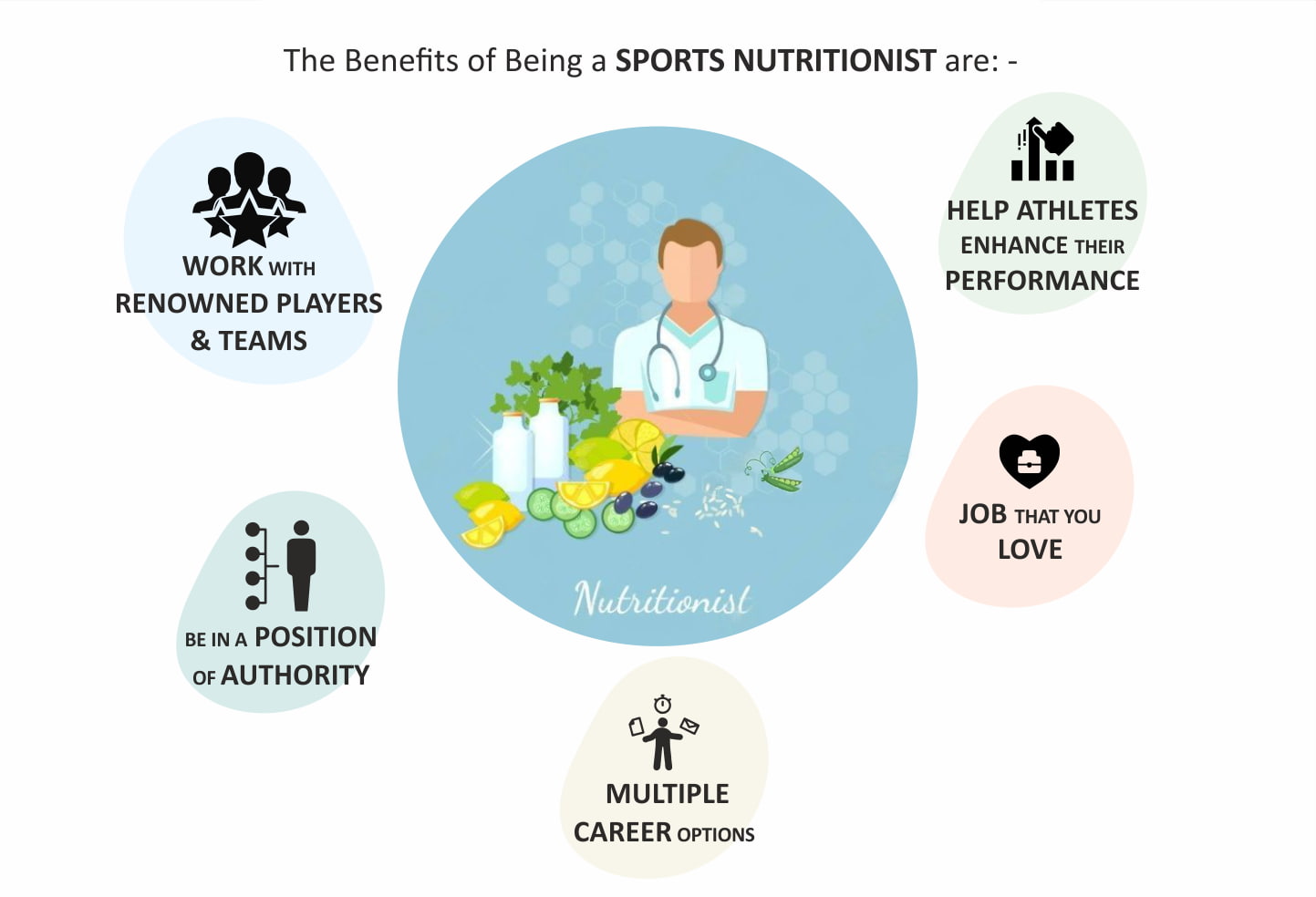
A nutritionist or dietitian working in a fitness setting provides nutrition consultations for members and offers eating plans for weight loss and improved health. In addition, the development of nutrition education programs, creating handouts and writing newsletter articles are all possible duties in this position.
Sports nutrition jobs focus on improving the performance of athletes by offering dietary guidance that will result in muscle gain, weight loss, improved endurance, increased energy or increased strength. Sports nutrition jobs are most often available within collegiate athletics or professional sporting organizations.
International society for sports nutrition
Moore DR, Robinson MJ, Fry JL, Tang JE, Glover EI, Wilkinson SB, et al. Ingested protein dose response of muscle and albumin protein synthesis after resistance exercise in young men. Am J Clin Nutr. 2009;89:161–8.
Positive results have also been seen in elite athletes that consume meat-based proteins, as opposed to vegetarian diets . For example, carnitine is a molecule that transports long-chain fatty acids into mitochondria for oxidation and is found in high amounts in meat. While evidence is lacking to support an increase in fat oxidation with increased carnitine availability, carnitine has been linked to the sparing of muscle glycogen, and decreases in exercise-induced muscle damage . Certainly, more research is needed to support these assertions. Creatine is a naturally occurring compound found mainly in muscle. The concentration of creatine in uncooked chicken and beef is approximately 30 mmol/kg (4–5 g/kg), meaning that one serving of beef contains approximately 0.4 g of creatine . Vegetarians have lower total body creatine stores than omnivores, which demonstrates that regular meat eating has a significant effect on human creatine status . Moreover, creatine supplementation studies with vegetarians indicate that increased creatine uptake levels do exist in people who practice various forms of vegetarianism . Sharp and investigators published the only study known to compare different supplemental (powdered) forms of animal proteins on adaptations to resistance training such as increases in strength and improvements in body composition. Forty-one men and women performed a standardized resistance-training program over eight weeks and consumed a daily 46 g dose of either hydrolyzed chicken protein, beef protein isolate, or whey protein concentrate in comparison to a control group. All groups experienced similar increases in upper and lower-body strength, but all protein-supplemented groups reported significant increases in lean mass and decreases in fat mass.
For example, Moore found that muscle and albumin protein synthesis was optimized at approximately 20 g of egg protein at rest. Witard et al. provided incremental doses of whey protein (0, 10, 20 and 40 g) in conjunction with an acute bout of resistance exercise and concluded that a minimum protein dose of 20 g optimally promoted MPS rates. Finally, Yang and colleagues had 37 elderly men (average age of 71 years) consume incremental doses of whey protein isolate (0, 10, 20 and 40 g/dose) in combination with a single bout of lower body resistance exercise and concluded that a 40 g dose of whey protein isolate is needed in this population to maximize rates of MPS. Furthermore, while results from these studies offer indications of what optimal absolute dosing amounts may be, Phillips concluded that a relative dose of 0.25 g of protein per kg of body weight per dose might operate as an optimal supply of high-quality protein. Once a total daily target protein intake has been achieved, the frequency and pattern with which optimal doses are ingested may serve as a key determinant of overall changes in protein synthetic rates.

Moore DR, Robinson MJ, Fry JL, Tang JE, Glover EI, Wilkinson SB, et al. Ingested protein dose response of muscle and albumin protein synthesis after resistance exercise in young men. Am J Clin Nutr. 2009;89:161–8.
Positive results have also been seen in elite athletes that consume meat-based proteins, as opposed to vegetarian diets . For example, carnitine is a molecule that transports long-chain fatty acids into mitochondria for oxidation and is found in high amounts in meat. While evidence is lacking to support an increase in fat oxidation with increased carnitine availability, carnitine has been linked to the sparing of muscle glycogen, and decreases in exercise-induced muscle damage . Certainly, more research is needed to support these assertions. Creatine is a naturally occurring compound found mainly in muscle. The concentration of creatine in uncooked chicken and beef is approximately 30 mmol/kg (4–5 g/kg), meaning that one serving of beef contains approximately 0.4 g of creatine . Vegetarians have lower total body creatine stores than omnivores, which demonstrates that regular meat eating has a significant effect on human creatine status . Moreover, creatine supplementation studies with vegetarians indicate that increased creatine uptake levels do exist in people who practice various forms of vegetarianism . Sharp and investigators published the only study known to compare different supplemental (powdered) forms of animal proteins on adaptations to resistance training such as increases in strength and improvements in body composition. Forty-one men and women performed a standardized resistance-training program over eight weeks and consumed a daily 46 g dose of either hydrolyzed chicken protein, beef protein isolate, or whey protein concentrate in comparison to a control group. All groups experienced similar increases in upper and lower-body strength, but all protein-supplemented groups reported significant increases in lean mass and decreases in fat mass.
For example, Moore found that muscle and albumin protein synthesis was optimized at approximately 20 g of egg protein at rest. Witard et al. provided incremental doses of whey protein (0, 10, 20 and 40 g) in conjunction with an acute bout of resistance exercise and concluded that a minimum protein dose of 20 g optimally promoted MPS rates. Finally, Yang and colleagues had 37 elderly men (average age of 71 years) consume incremental doses of whey protein isolate (0, 10, 20 and 40 g/dose) in combination with a single bout of lower body resistance exercise and concluded that a 40 g dose of whey protein isolate is needed in this population to maximize rates of MPS. Furthermore, while results from these studies offer indications of what optimal absolute dosing amounts may be, Phillips concluded that a relative dose of 0.25 g of protein per kg of body weight per dose might operate as an optimal supply of high-quality protein. Once a total daily target protein intake has been achieved, the frequency and pattern with which optimal doses are ingested may serve as a key determinant of overall changes in protein synthetic rates.
